Smart Garden Pod Types: Round, Square, and Soil-Wick Explained
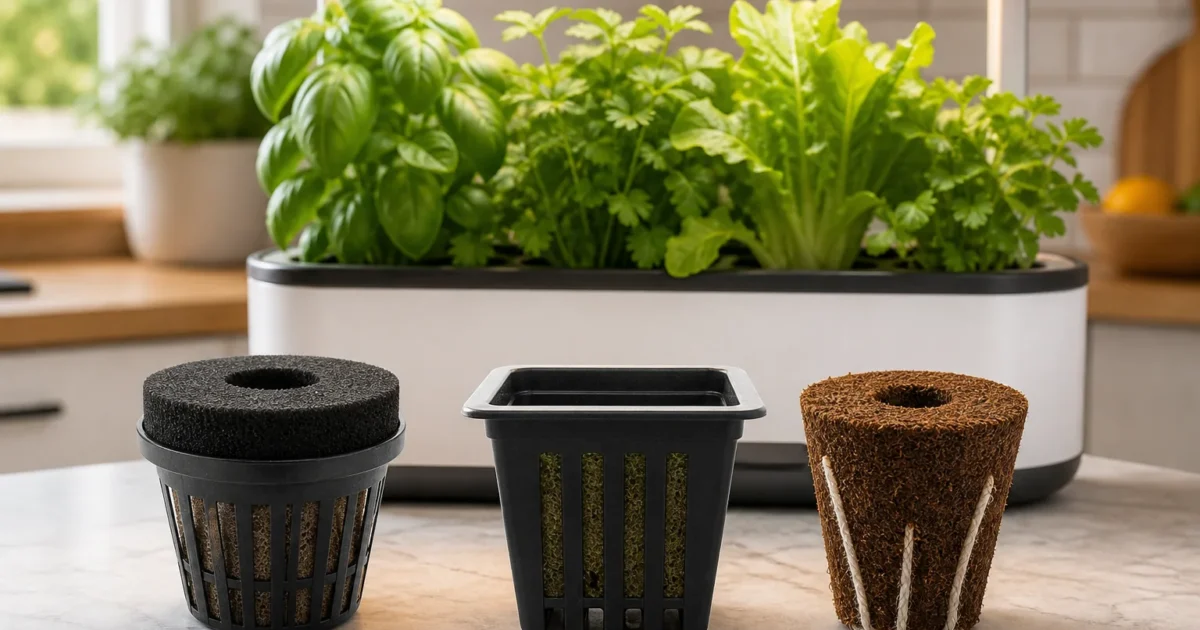
Shop for refill pods for a countertop hydroponic garden and you’ll find dozens of listings claiming to fit “most systems” – which is true just often enough to be dangerous. In practice there are only three smart garden pod types worth knowing: a round basket-and-sponge format that the majority of countertop systems share, a square deck format that looks similar in photos but will not seat the same hardware, and a soil-wick format that works on an entirely different mechanism. This guide walks through how to tell which one your system uses, the two real exceptions to watch for before you buy the wrong refill kit, and where to check your exact model if the packaging still leaves you guessing.
Smart Garden Pod Types: The One Rule That Covers Most Systems
The dominant format is a round plastic net basket holding a grow sponge, and it is genuinely close to universal within its own family. ScottsMiracle-Gro’s own AeroGarden seed-kit page states that all AeroGarden seed pods use the same standard basket size and fit the Sprout, Harvest, Bounty, and Farm model lines (ScottsMiracle-Gro AeroGarden seed kits). That single sentence is the load-bearing fact behind this whole article: inside AeroGarden’s own lineup, a pod is a pod.
The round format also shows up outside AeroGarden’s own branding. LetPot’s 172-piece bulk refill kit describes its sponges and baskets as compatible with AeroGarden and “iDOO-style” hydroponic systems (LetPot 172-piece seed pod kit), and inbloom’s official store markets seed pod kits as compatible with AeroGarden, iDOO, Ahopegarden, and other hydroponic growing systems (inbloom official store). Treat those as real support for the round-compatible layer, but only when the specific product you’re looking at is genuinely a round basket-and-sponge kit – “compatible with most systems” on a listing page is marketing shorthand, not a fitment guarantee.
That’s also why this article exists instead of a longer brand-by-brand list. Some marketing copy stretches the round-format story to cover more brands than any manufacturer page actually confirms. If you’re comparing a system not named here, the safer move is to check the deck itself – basket shape, deck-hole size, whether there’s a visible wick – rather than trust a “universal fit” claim, or run your exact model through the Which System Fits finder instead of guessing from a listing photo.
Round Pods: The AeroGarden-Style Basket and Sponge
Round pods are the default among smart garden pod types, and recognizing one is simple: a plastic net basket, roughly the size of a large bottle cap, holding a foam grow sponge that sits down into a hole in the deck. Two versions exist. Pre-seeded kits arrive with seed already embedded in the sponge; “Grow Anything” style kits arrive empty, and you sow your own seed into the sponge before inserting it into the basket. Both are still the same round basket-and-sponge hardware – the difference is only whether the seed comes pre-loaded.
One mix-up is worth flagging before it costs you a wrong order: AeroGarden’s seed pods are not the same product as its seed-starting trays. ScottsMiracle-Gro’s Farm seed-starting system page describes a tray that replaces the entire grow deck on Farm, Farm Plus, or Farm XL models (ScottsMiracle-Gro Farm seed-starting system) – that’s a deck-replacement accessory, not a pod, and it is tied to specific model families rather than being universal the way ordinary pods are.
If you already own the reusable baskets and only need the consumable part, AeroGarden’s own 50-pack Grow Sponges listing notes the sponges work in any AeroGarden model and ship without baskets, labels, or seed included (AeroGarden Grow Sponges 50 Pack) – useful if your baskets survived but your sponges didn’t.
Square Pods: The iDOO and LetPot Mini Exception
The first real exception to the round rule is deck shape, and it hides inside brand names that also sell round products. iDOO’s own Japan comparison table classifies some of its systems as square and a separate 12-pod premium line as round (iDOO Japan comparison table) – proof, from the manufacturer itself, that “iDOO” is not one universal shape. iDOO’s current U.S. manuals page lists model names and numbers, but the visible index doesn’t spell out pod shape the way the Japan table does (iDOO U.S. manuals page), so a U.S. buyer should verify the exact model number rather than assume the brand name settles it.
LetPot has the same split. Its mainstream Max/Senior/Lite/Air refill kits belong in the round-compatible layer, but its Mini kit is a different product entirely – the listing is explicitly titled for a square hydroponics growing system and states it is suitable for the LetPot Mini or Mini-W only (LetPot square Mini kit). A round basket bought for a mainstream LetPot unit will not seat in a Mini deck, and vice versa.
One additional data point worth knowing, though it’s secondary rather than manufacturer-hosted: a mirrored iDOO seed pod kit manual specifically flags the ID-IG201 model as excluded from an otherwise broad compatibility claim (iDOO seed pod kit manual mirror). Treat that as a reminder to check the model number, not as a complete exclusion list – the broader, better-supported rule is still “verify deck shape by model, not by brand.”
Soil-Wick Pods: The Click & Grow Exception
The second exception doesn’t just change shape – it changes the entire feeding mechanism. Click & Grow’s standard pods use what the company calls Smart Soil, made from coco-coir and peat with nutrients already mixed in, rather than a bare sponge (Click & Grow Smart Soil). Water doesn’t flood a reservoir the pod sits in; instead, a wick draws water up from the tank into the pod (Click & Grow wicks).
That mechanism produces a confirmed and easy-to-miss mistake: don’t feed a Click & Grow tank the way you’d feed an AeroGarden reservoir. Click & Grow’s own soil guidance says adding fertilizer directly to the tank isn’t ideal for standard pods, because the wick filters much of it out before it reaches the plant, and recommends adding plant food from above when using alternate growing media (Click & Grow soil guidance). Pour a bottle of ordinary hydroponic nutrient into a Click & Grow tank the way the AeroGarden instructions tell you to, and you’re working against the pod’s own design.
This is also where a third-party compatibility claim runs into trouble. LetPot markets its sponges and baskets as compatible with “Clickandgrow” systems, but that conflicts with Click & Grow’s own documented Smart Soil and wick design. Click & Grow is the stronger source for describing its own hardware, so treat LetPot’s claim as marketing shorthand rather than confirmed fitment – a round sponge basket is not a drop-in substitute for a soil-wick cup.
One nuance worth hedging honestly: Click & Grow also sells a Pro Plant Cup accessory with perforated walls that let roots grow directly into the tank, which the company says improves water and nutrient uptake at the cost of more maintenance (Click & Grow Pro Plant Cup). That doesn’t contradict the soil-wick description above – it’s an advanced, optional accessory layered on top of the standard format, not evidence that ordinary Click & Grow pods behave like a reservoir system.
Why the Format Also Changes How You Plant and Feed
Format isn’t just a fitment question – it changes the actual steps you follow. The University of Florida’s IFAS Extension makes this the cleanest way: its tabletop hydroponics guide notes that pod-based systems generally use pods containing seed, growth media, and nutrients with a wick drawing water up, but adds that each set is a little different and users should follow the instructions for their specific set (UF/IFAS Tabletop Hydroponics Tutorial) – an extension-backed reason not to assume one universal sequence.
Even within AeroGarden’s own round format, the order differs by kit type. The pre-seeded planting guide says to add water first, dose plant food according to the bottle’s instructions based on pod-hole count, then drop the pre-seeded pods in label-side up (ScottsMiracle-Gro AeroGarden planting guide). The Grow Anything guide runs a different order entirely: label first, sow seed into the sponge, insert the sponge into the basket, place the pods, add the domes, then add water to the fill line while avoiding well or softened water (ScottsMiracle-Gro Grow Anything how-to). Some third-party dry-sponge kits add a step neither AeroGarden guide requires: pre-soaking the sponge for roughly 10 to 15 minutes before it goes into the basket, per iDOO’s own seed pod kit manual.
Two habits apply across every round-format system. First, leave the pod labels on – ScottsMiracle-Gro’s planting guide notes labels identify the plant and help inhibit algae, and recommends covering any empty pod holes with spacers for the same reason. Second, mind your water source: the Grow Anything guide and UF/IFAS both independently warn against well or softened water, which can affect growth or damage the system.
Two mild cosmetic issues are worth naming so they don’t cause panic. AeroGarden’s own FAQ describes white fuzz on a grow sponge as likely beneficial fungus that won’t harm germination and fades once the plant shades the sponge, while ScottsMiracle-Gro’s seed-kit page separately describes it as typically excess-moisture mold – both sources agree it’s usually not an emergency, even if they don’t agree on the exact cause. Algae in the reservoir or around deck holes is described the same way: cosmetic, not a sign of crop failure, and mostly prevented by keeping labels on and holes covered.
Roughly What Each Format Costs (Checked at Publication)
Prices move constantly and vary by pod count, retailer, and whether a kit includes seed, nutrient, and hardware or just consumables – so treat the numbers below as checked-at-publication examples, not a durable price list.
| Format | Example kit | Price (checked) | Source |
|---|---|---|---|
| Round, OEM | AeroGarden Grow Anything, 9-pod | $21.95 | ScottsMiracle-Gro Grow Anything |
| Round, bulk aftermarket | LetPot 172-piece refill kit | $26.89 | LetPot 172-piece kit |
| Square | LetPot Mini 77-piece refill kit | $18.86 | LetPot square Mini kit |
| Soil-wick | Click & Grow plant pods, 3-pack / 9-pack | $14.95 / $29.95 | Click & Grow plant pods |
The pattern worth remembering isn’t any one price – it’s that bulk seedless refill kits (LetPot’s round and square lines) run cheaper per piece than pre-seeded OEM kits, while soil-wick pods carry a premium because the format bundles growing medium and nutrients into the pod itself rather than a separate bottle.
Smart Garden Pod Types: Quick Decision Tree
- Pull a pod and look at it. A plastic net basket holding a foam sponge, roughly bottle-cap sized, points to the round format shared by AeroGarden and most mainstream refill kits.
- Check whether the basket or deck opening is square rather than round. If your manual or listing says “Mini,” “Mini-W,” or names a square hydroponics system, you’re in the square exception – round baskets will not seat.
- Check whether there’s a basket at all. A solid tan or brown plug with no visible net basket, sitting in a tank with a wick running down into it, is the Click & Grow soil-wick format – feed it from above, not through the reservoir.
- Still not sure, or the brand isn’t named in this guide? Check the exact model number against the manufacturer’s own product or support page rather than a retailer listing, or run it through the Which System Fits finder for a direct answer.
What to Do Next
If you’ve confirmed you’re working with a round AeroGarden-style deck, the deeper buying guide is Which Pods Fit My AeroGarden? – it covers the full aftermarket path, nutrient substitutes, and the two mistakes that trip up most owners switching away from OEM. If part of your confusion is whether AeroGarden even still sells pods, Is AeroGarden Discontinued? covers the 2024 wind-down and 2025 relaunch in detail.
If your unit has no visible model tag or the packaging is long gone, don’t guess from a general “universal fit” claim. Check the manufacturer’s own support or manuals page for your specific brand, since regional pages can differ – iDOO’s Japan site, for example, shows a pod-shape comparison its U.S. pages don’t visibly repeat. When in doubt, the Which System Fits finder is built for exactly this: it separates the universal parts of a fitment claim from the model-specific ones so you’re not relying on a listing photo.
What is the most common smart garden pod type?
The round plastic net basket holding a foam grow sponge, the format ScottsMiracle-Gro confirms is standard across every AeroGarden model. Most mainstream aftermarket refill kits, including LetPot’s bulk kits and inbloom’s round kits, are built to the same round format.
How do I know if my system uses square instead of round pods?
Look at the basket or deck opening itself, or check whether your manual or listing names a square system – iDOO’s own comparison table classifies some of its lines as square and others as round, and LetPot’s Mini and Mini-W kits are explicitly square-only. Brand name alone doesn’t tell you; the model number and deck shape do.
Can I use AeroGarden-style pods in a Click & Grow?
No. Click & Grow’s standard pods use Smart Soil and a wick that draws water up from the tank, a different mechanism from AeroGarden’s basket-and-sponge, liquid-fed reservoir. Some third-party sellers market broad compatibility including Click & Grow, but that conflicts with Click & Grow’s own documented pod design, and the manufacturer is the stronger source for its own hardware.
Do all iDOO systems use the same pod shape?
No. iDOO’s own Japan comparison table shows some models as square and others, including a 12-pod premium line, as round. Check the exact model number on iDOO’s manuals or support page rather than assuming every iDOO system matches.
Can I pour hydroponic nutrient directly into a Click & Grow tank?
Not for standard pods. Click & Grow’s own guidance says tank fertilization isn’t ideal because the wick filters out much of it, and recommends adding plant food from above when using alternate growing media instead of dosing the reservoir the way you would with a round-format system.
Where can I check exactly what fits my specific model?
Run it through the Which System Fits finder, which checks fitment by model rather than by a brand’s general marketing claim. For AeroGarden specifically, Which Pods Fit My AeroGarden? walks through the full compatible and aftermarket options.
The bottom line
Nearly every smart garden pod type on the market falls into one of three buckets: the round basket-and-sponge format that AeroGarden and most mainstream aftermarket kits share, the square deck format that iDOO and LetPot’s Mini line carve out as a real exception, and Click & Grow’s soil-wick format, which feeds and waters on a completely different mechanism. Check the pod itself – basket shape, deck opening, whether there’s a wick – before you buy a refill kit based on a brand name or a “compatible with most systems” claim. When the pod in your hand doesn’t clearly match one of the three, verify the exact model against the manufacturer’s own page, or run it through the Which System Fits finder instead of guessing.
More in this guide
- Is AeroGarden Discontinued? What Actually Happened, and What Still Fits Is AeroGarden Discontinued? What Actually Happened, and What Still Fits If you typed is AeroGarden discontinued into a search bar because your…
- Smart Garden Proprietary Pods: Which Brands Lock You In (And Which Don’t) Smart Garden Proprietary Pods: Which Brands Lock You In (And Which Don’t) The sticker price on a countertop hydroponic garden is not…
- Can You Use General Hydroponic Nutrients in a Smart Garden? Can You Use General Hydroponic Nutrients in a Smart Garden? Whether you can use general hydroponic nutrients in a smart garden comes…
- Which Pods Fit My AeroGarden? Compatible Pods + Nutrients Guide If your AeroGarden pods are getting harder to find – or you have hit the unit’s “buy more pods” wall and balked…
Related guides
Is AeroGarden Discontinued? What Actually Happened, and What Still Fits
Is AeroGarden Discontinued? What Actually Happened, and What Still Fits If you typed is AeroGarden discontinued into a…
Smart Garden Proprietary Pods: Which Brands Lock You In (And Which Don’t)
Smart Garden Proprietary Pods: Which Brands Lock You In (And Which Don’t) The sticker price on a countertop…
Can You Use General Hydroponic Nutrients in a Smart Garden?
Can You Use General Hydroponic Nutrients in a Smart Garden? Whether you can use general hydroponic nutrients in…