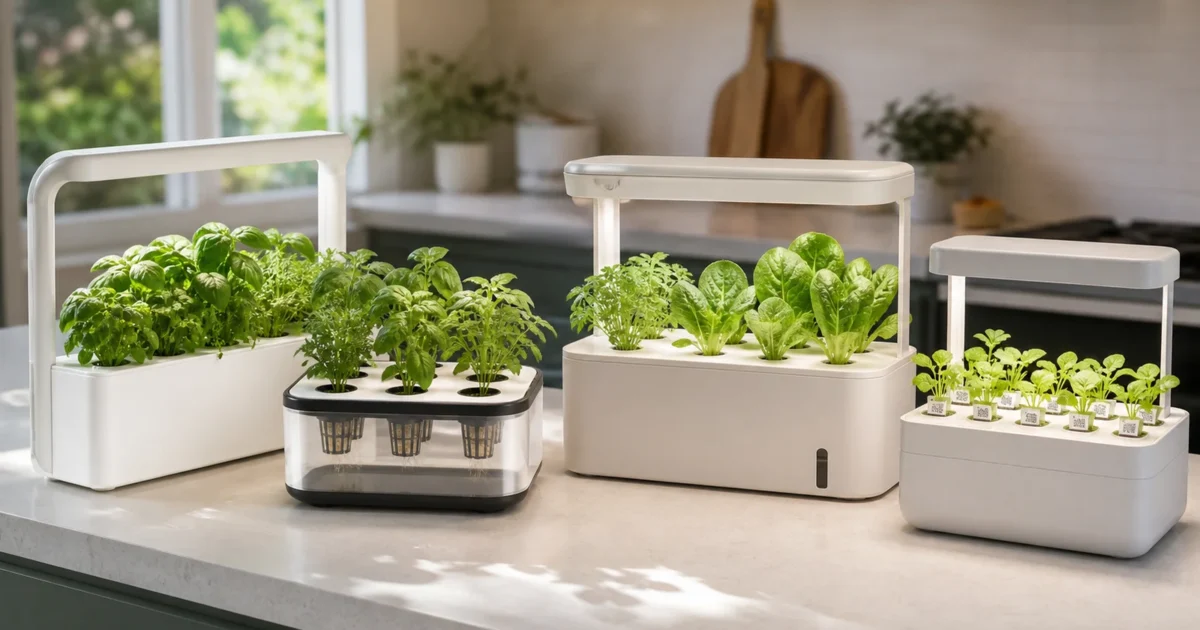
Smart Garden Proprietary Pods: Which Brands Lock You In (And Which Don’t)
The sticker price on a countertop hydroponic garden is not the real cost – the pods, nutrients, and subscriptions you buy for it over the next three years usually are. That makes smart garden proprietary pods the buying question nobody frames clearly enough: not “does this brand sell pods,” but “what happens once the pods that came in the box are gone?” The honest answer splits by brand and even by the kind of lock-in involved – some systems lock you into a growing medium, some lock you into an app or membership, and some barely lock you into anything beyond a plastic cup shape. This guide walks through where each major system actually falls, using each manufacturer’s own documentation rather than marketing claims about “universal fit.”
Smart Garden Proprietary Pods: The Short Answer
No single verdict covers every brand, because lock-in isn’t binary. Here’s the honest split, based on each manufacturer’s own current documentation:
| Brand | What locks you in | Can you use your own seeds? |
|---|---|---|
| Plantaform | QR-coded Plant Packs (technical, not just commercial) | Not currently – own-seed is described as an upcoming feature, not a live workflow |
| Gardyn | Membership/a la carte yCube economics | Yes, via Seedless yCubes |
| Click & Grow | Proprietary Smart Soil medium | Yes, via seedless Grow Anything pods, but still inside Click & Grow’s cartridge |
| Lettuce Grow | Live-seedling convenience channel | Yes, DIY seedling starts are supported alongside the seedling service |
| Rise Gardens | App plant-category matching, foil, crop-height limits | Yes, via seedless pods |
| AeroGarden | Basket size only (low) | Yes, via Grow Anything kits |
| Aerospring | Required grow cups only (lowest) | Yes, encouraged |
| iDOO / LetPot | Model-specific pod geometry | Mostly yes, but shape varies by model |
None of these brands have been run head-to-head by this site, so nothing here is a “best” verdict – it’s a map of what each company’s own documentation says happens after the included pods run out.
Why Pod Lock-In Isn’t a Yes-or-No Question
Hydroponic growing, at its core, just means growing without soil while feeding the plant through a nutrient solution or an aggregate media, per Penn State Extension’s plant-nutrition guide (Penn State Extension). That framing matters here because it shows lock-in can attach to more than one layer: the seed itself, the growing medium or pod geometry, the nutrient dosing, an app or membership, and model-specific accessories. A brand can be open on one axis and closed on another – which is exactly what the research behind this article found.
Lettuce Grow is the clearest example of a split verdict. Its commercial flow centers on live seedlings shipped to your door, but its own support content also walks through DIY seedling starts using ordinary hydroponic grow media and seed of your choosing (Lettuce Grow seedlings). That’s higher convenience lock-in paired with lower seed-and-nutrient lock-in – not a single label.
Plantaform: The Most Technical Lock-In
Plantaform is the strongest example of lock-in that isn’t really about upselling – it’s built into how the machine works. Its Plant Packs contain 15 pre-seeded Plant Pods along with a pod frame, rockwool, and seeds, and setup requires scanning the Plant Pack’s QR code so the app recognizes the pack’s settings (Plantaform Getting Started Guide, Plantaform Plant Packs). A “Grow Your Own” feature has been described as upcoming rather than live, so this article isn’t claiming Plantaform currently supports a normal own-seed workflow – the verified, current path runs through Plant Packs.
Plantaform’s own warranty terms reinforce how deep the lock-in runs: pod warranty coverage applies only when Plant Pods are grown using Rejuvenate and Plantaform’s own accessories, such as Pod Plugs, Germination Domes, and Plantaform Nutrients (Plantaform shipping/warranty FAQ). At the time of this research, a 15-pod Herb Essentials Plant Pack was listed at $39.99 regular ($29.99 on sale), and Pod Plugs at $19.99 regular ($14.99 on sale) – treat those as snapshots, not durable pricing (Plantaform Herb Essentials, Plantaform Pod Plugs). Plantaform also ships only to Canada, the U.S., and the United Arab Emirates, so availability itself is a real constraint before lock-in even enters the picture (Plantaform shipping/warranty FAQ).
Gardyn: Subscription Leverage, Not Absolute Lock-In
Gardyn leans commercial rather than technical. The company sells Seedless yCubes specifically for growers who want to add their own seed, and non-members can still use limited app functions – adjusting lighting and watering, reading temperature, humidity, and water level – while buying yCubes a la carte at a higher per-unit rate (Gardyn FAQ, Gardyn Seedless yCube). Membership adds monthly yCube credits, but those credits are per-device: Home members get 10 credits a month and Studio members get 5, and a single membership does not cover multiple Gardyn units (Gardyn Membership). At the time of this research, non-members paid $4.99 per yCube plus a $9.99 flat shipping rate, while members’ extra yCubes started at $1.99 (Gardyn FAQ).
The honest read: Gardyn’s economics push you toward membership, but the seedless option and non-member app access mean it isn’t absolute seed lock-in the way some marketing framing might suggest.
Click & Grow: Own Seeds, Proprietary Medium
Click & Grow sits in the middle. Its Grow Anything pods contain no seed and are explicitly designed for growers to add their own – and the pods still include plant food for up to four months depending on the species (Click & Grow Grow Anything support). So the seed itself isn’t locked in. What is locked in is the growing medium: your seed still goes into Click & Grow’s proprietary Smart Soil cartridge, not a generic sponge or net cup. In the U.S., Grow Anything pods were listed at $14.95 for a 3-pack, $29.95 for a 9-pack, and $59.95 for a 30-pack at the time of this research (Click & Grow Grow Anything collection).
Replacement hardware compatibility is model-specific rather than universal across the Click & Grow line – one product page lists plastic cup compatibility with the Smart Garden 3, Smart Garden 9, and Wall Farm, while a separate support article names the Smart Garden 3, 9, and 27 (Click & Grow Plastic Cups, Click & Grow cup support). Check the exact model before assuming a part fits.
The Split Cases: Lettuce Grow, Rise Gardens, and AeroGarden
Three brands don’t fit cleanly into “locked” or “open.” Lettuce Grow sells live seedlings at $2.99 each (or $2.49 in a grow pack) as its convenience path, but its own weekly-checks guide describes ordinary hydroponic maintenance underneath – topping off water, adding A & B nutrients after at least a gallon of water, and testing pH to a 5.8-6.2 target for its Farmstand Nook (Lettuce Grow Farmstand FAQ, Lettuce Grow weekly checks). That’s higher seedling-convenience lock-in paired with lower seed-and-nutrient lock-in.
Rise Gardens sells Seedless Pods – around $12.99 for a 12-pouch option at the time of this research – for growers who want to supply their own seed, but the workflow isn’t frictionless (Rise Seedless Pods). Seedless pods don’t include the foil sticker that standard pods have, so users must add their own, and Rise asks growers to log their own-seed plants in the app by matching them to a Rise plant category so nutrient dosing keeps working (Rise seedless pod support).
AeroGarden is closer to the open end. Its Grow Anything kits include grow sponges, baskets, pod labels, plant food, and instructions – everything except seed – and the basket format is standard across the Sprout, Harvest, Bounty, and Farm lines (AeroGarden Grow Anything). We’ve covered that universal basket format in more depth in Smart Garden Pod Types. Pricing is fragmented rather than locked: recent 9-pod Grow Anything listings clustered around $21.95 to $22.98 across AeroGarden, Scotts, and Walmart, while some Lowe’s SKUs were marked no longer sold – treat any single number as a snapshot, not a fixed price (Scotts AeroGarden Grow Anything, Walmart AeroGarden Grow Anything).
The Low-Lock-In Systems: Aerospring, iDOO, and LetPot
Aerospring is the most open system in this research. Its own FAQ encourages growers to germinate their own seeds off-system – in rockwool, vermiculite, or a similar media – and transfer seedlings into the tower once they’re about 2 inches tall, show true leaves, and have visible roots (Aerospring FAQ). The one required proprietary part is the grow cup itself; beyond that, Aerospring directs U.S. growers to buy hydroponic nutrients from Amazon, garden centers, or hydroponic supply stores rather than a house brand (Aerospring FAQ).
iDOO and LetPot are lower-lock-in own-seed sponge-and-basket systems, but both carry a caveat: pod geometry is not uniform across every model. iDOO’s own comparison table classifies some of its systems as square and a separate premium 12-pod line as round, so “iDOO” alone doesn’t tell you which shape you’re buying (iDOO model comparison). LetPot’s SS-Pro product page states that model needs no app subscription and no special pods or refills – a genuinely open claim, but one that applies to that specific product, not necessarily every LetPot device (LetPot SS-Pro).
One claim needs an explicit hedge here: LetPot markets its sponges and baskets as compatible with AeroGarden, iDOO, and Click & Grow systems (LetPot replacement kit). That’s one manufacturer’s claim about other companies’ hardware, and it runs into a real conflict – Click & Grow’s own documentation treats its Plant Pods as proprietary and its replacement cups as model-specific (Click & Grow Plastic Cups). Treat LetPot’s cross-brand claim as marketing language, not tested compatibility, and check the exact model fit yourself before buying.
What Lock-In Actually Costs You Over Time
The unit price on any of these systems is only the entry fee. The real cost is what you spend on consumables across a machine’s working life, and that’s precisely what pod lock-in controls. A system with genuine own-seed and generic-nutrient support – Aerospring, or an AeroGarden run on generic sponges – lets that recurring spend shrink toward whatever seed and nutrient cost the rest of the hydroponic market. A system built around a closed pod ecosystem, like Plantaform’s Plant Packs or Click & Grow’s Smart Soil cartridges, keeps that recurring spend tied to one company’s current pricing and availability, sale-driven or not.
Neither approach is automatically the “smarter” purchase – Plantaform’s technical lock-in exists because its QR-coded workflow genuinely automates nutrient dosing and settings, which is a real convenience trade some growers will pay for. The point isn’t that proprietary pods are a scam; it’s that “does this brand sell pods” is the wrong question. The right one is “what choice do I have once the box’s pods are gone, and what does that choice cost.”
How to Check Lock-In Before You Buy
A few minutes of checking beats trusting a listing photo:
- Read the manufacturer’s own current support or product page, not a retailer listing or a third-party compatibility claim. Brand-to-brand fitment claims (like LetPot’s) should be verified against the target brand’s documentation, not the seller’s.
- Look for the words “seedless” or “own seed.” If a brand sells a seedless version of its pod, that’s real evidence of an open seed path – but check whether using it still requires logging the plant in an app (Rise) or growing inside a proprietary medium (Click & Grow).
- Check whether full functionality requires an app or membership. Gardyn works without a membership at reduced functionality; some other systems don’t clearly document a no-app path.
- Confirm pod or cup geometry by exact model number, not brand name alone – iDOO and Click & Grow both use more than one shape across their own lineups.
- Treat any price you see as a snapshot. Every price cited in this article was current only at the time of research; smart-garden consumable pricing moves often.
If you already know which system you’re comparing, run it through the Which System Fits finder to check pod, nutrient, and accessory compatibility by exact model rather than by brand-level claims.
Which smart garden has the least pod lock-in?
Aerospring, based on its own FAQ: it encourages growers to germinate their own seed off-system and buy any hydroponic nutrient from a garden center or Amazon rather than a house brand. The only required proprietary part is the grow cup itself.
Which smart garden has the most pod lock-in?
Plantaform, and it’s a technical lock-in rather than a commercial one – its QR-coded Plant Pack workflow is built into how the app doses nutrients and tracks the grow, and warranty coverage requires using Plantaform’s own accessories.
Can I use my own seeds in a Gardyn?
Yes, through Gardyn’s Seedless yCubes. Non-members can also use limited app functions and buy yCubes a la carte, though at a higher per-unit rate than members receive through monthly credits.
Can I put AeroGarden pods in a Click & Grow, or LetPot parts in a Click & Grow?
No – don’t treat that as verified. LetPot markets its sponges and baskets as compatible with AeroGarden, iDOO, and Click & Grow, but Click & Grow’s own documentation describes its Plant Pods and replacement cups as proprietary and model-specific, which conflicts with that cross-brand claim. Check the target brand’s own page before assuming cross-brand fit.
Do proprietary pods grow better plants than open systems?
This article makes no such claim, and none of these systems have been run head-to-head here. Pod lock-in is a cost-and-flexibility question, not a performance verdict.
Where can I check exactly what fits my specific smart garden model?
Run it through the Which System Fits finder, which checks compatibility by model rather than by a brand’s general marketing claim. If your system uses an AeroGarden-style basket, Which Pods Fit My AeroGarden? covers the full aftermarket path.
Sources
- Penn State Extension – Hydroponics Systems and Principles of Plant Nutrition
- Plantaform Getting Started Guide
- Plantaform Plant Packs
- Plantaform Shipping/Warranty FAQ
- Plantaform Herb Essentials Plant Pack
- Plantaform Pod Plugs
- Gardyn FAQ
- Gardyn Seedless yCube
- Gardyn Membership
- Click & Grow Grow Anything Support
- Click & Grow Grow Anything Collection (U.S. pricing)
- Click & Grow Plastic Cups
- Click & Grow Cup Support
- Lettuce Grow Farmstand FAQ
- Lettuce Grow Weekly Checks
- Rise Seedless Pods
- Rise Seedless Pod Support
- AeroGarden Grow Anything
- Scotts AeroGarden Grow Anything
- Walmart AeroGarden Grow Anything
- Aerospring FAQ
- iDOO Model Comparison
- LetPot SS-Pro
- LetPot Replacement Kit
The bottom line
“Proprietary pod” is too blunt a label for how these systems actually work. Plantaform’s lock-in is real and technical, built into a QR-coded workflow. Gardyn leans on membership economics but still sells a seedless, non-member path. Click & Grow lets you supply your own seed while keeping you inside its Smart Soil medium. Lettuce Grow, Rise, and AeroGarden each split differently across seed, nutrient, and convenience lock-in. Aerospring, iDOO, and LetPot sit closest to open – with the important caveat that pod geometry and cross-brand fit still need a model-level check, not a brand-name assumption.
Before you buy into any of these ecosystems, or before you buy another pod kit for the one you already own, check the manufacturer’s own current documentation for your exact model rather than a retailer listing or a competitor’s compatibility claim – or run it through the Which System Fits finder for a straight answer.
More in this guide
- Is AeroGarden Discontinued? What Actually Happened, and What Still Fits Is AeroGarden Discontinued? What Actually Happened, and What Still Fits If you typed is AeroGarden discontinued into a search bar because your…
- Smart Garden Pod Types: Round, Square, and Soil-Wick Explained Smart Garden Pod Types: Round, Square, and Soil-Wick Explained Shop for refill pods for a countertop hydroponic garden and you’ll find dozens…
- Can You Use General Hydroponic Nutrients in a Smart Garden? Can You Use General Hydroponic Nutrients in a Smart Garden? Whether you can use general hydroponic nutrients in a smart garden comes…
- Which Pods Fit My AeroGarden? Compatible Pods + Nutrients Guide If your AeroGarden pods are getting harder to find – or you have hit the unit’s “buy more pods” wall and balked…
Related guides
Is AeroGarden Discontinued? What Actually Happened, and What Still Fits
Is AeroGarden Discontinued? What Actually Happened, and What Still Fits If you typed is AeroGarden discontinued into a…
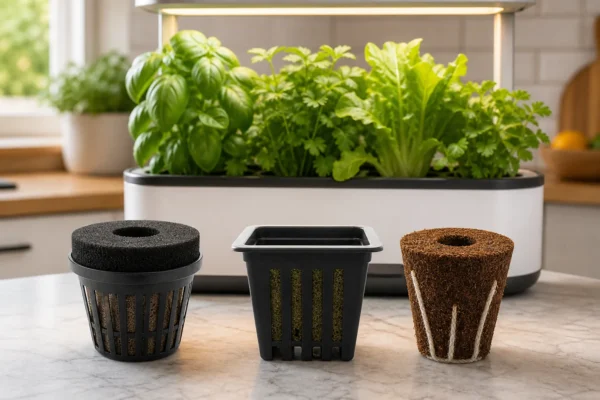
Smart Garden Pod Types: Round, Square, and Soil-Wick Explained
Smart Garden Pod Types: Round, Square, and Soil-Wick Explained Shop for refill pods for a countertop hydroponic garden…
Can You Use General Hydroponic Nutrients in a Smart Garden?
Can You Use General Hydroponic Nutrients in a Smart Garden? Whether you can use general hydroponic nutrients in…